
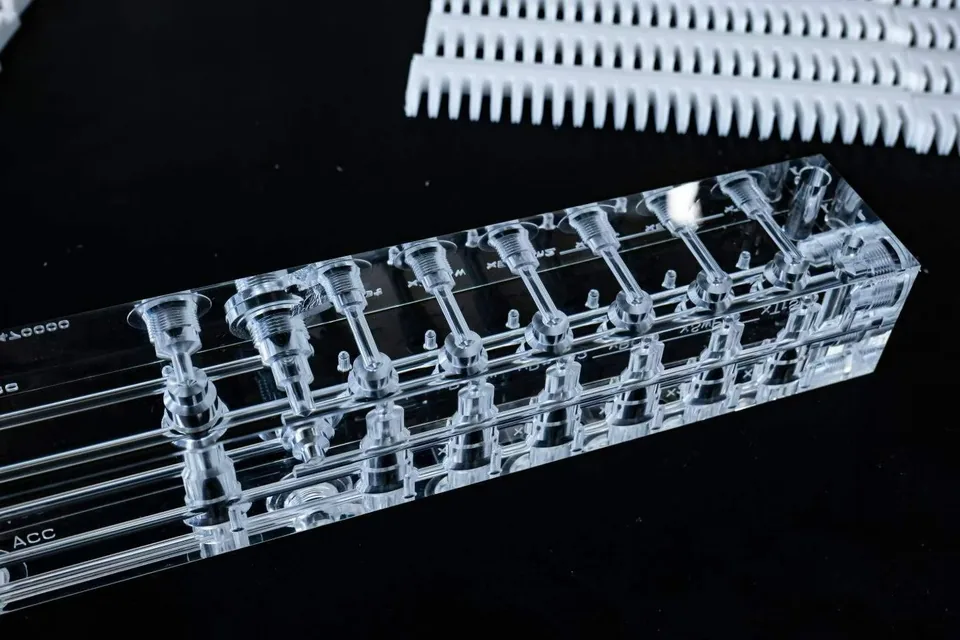
Complex Acrylic Component
- Material
- Acrylic (PMMA)
- Process
- 5-axis CNC machining
- Part type
- Transparent engineering component
Relevant considerations include tool access, transparent surface protection, edge condition and geometry review.
PLASTIC CNC MACHINING
Precision CNC-machined plastic parts manufactured from customer CAD files and engineering drawings, with support from prototype and low-volume production to repeat requirements.
PEEK · POM · PTFE · Nylon · Acrylic · Polycarbonate
REAL ENGINEERING EVIDENCE
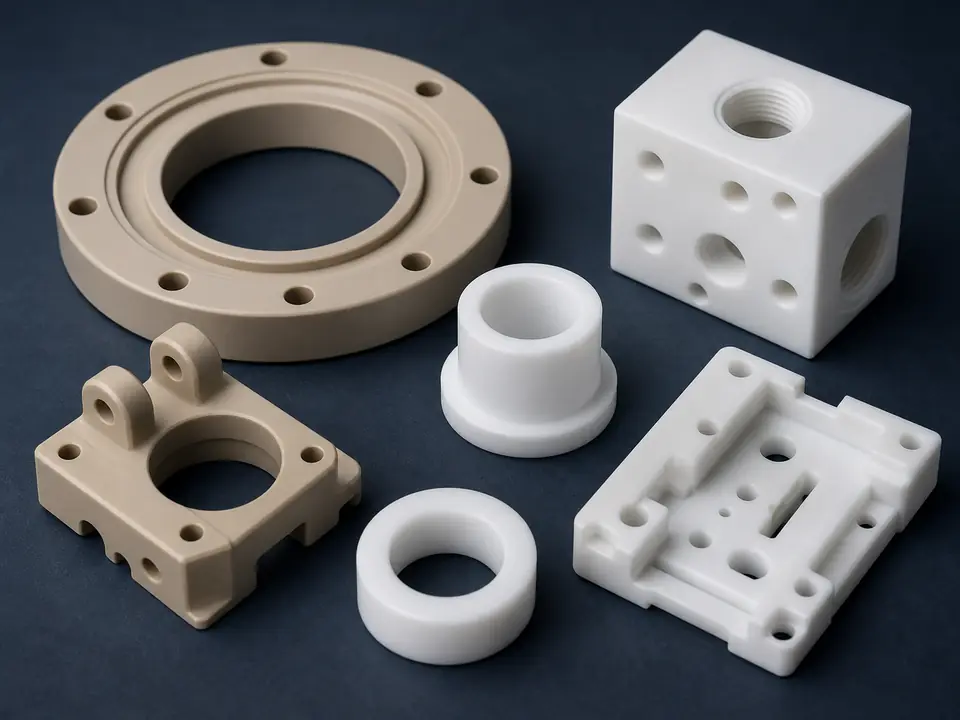
These existing component examples illustrate machined features, complex geometries and finished engineering-plastic surfaces.
Relevant considerations include tool access, transparent surface protection, edge condition and geometry review.
The poster loads first and the video plays only when requested, avoiding a permanent buffering state.
PARTS & APPLICATIONS
Depending on geometry and application requirements, plastic CNC machining may support the following representative part categories.
Custom components produced from supplied CAD files and controlled drawings.
Locating, holding and handling parts reviewed for stability and operating conditions.
Machined enclosures, covers and panels with defined interfaces and surface requirements.
Spacers, mounts and supports specified according to assembly and electrical requirements.
Guides, bushings and contact parts reviewed against load, movement and material behavior.
Prototype, low-volume and repeat production requirements supported through a documented review.
ENGINEERING PLASTICS
Projects may involve PEEK, POM, PTFE, nylon, acrylic, polycarbonate, ABS and other engineering plastics. Final selection should consider temperature, chemical exposure, mechanical load, friction, dimensional behavior, transparency and documentation requirements.
Material suitability is reviewed for the specific part rather than assumed from a generic material name.
Explore engineering plastic materials →ENGINEERING & QUALITY REVIEW
Thermal, chemical, wear and dimensional requirements inform material and machining review.
Clamping, deformation risk, thin walls and small features are assessed against part geometry.
Datums, tolerances, burrs, edges, surfaces and revision status should be defined on controlled documents.
Inspection methods and reporting are selected according to critical dimensions and agreed project needs.
Learn about quality and engineering review → · Explore supported industries →
PROJECT WORKFLOW
Send CAD files, drawings, material, quantity and application information.
Geometry, material behavior, critical requirements and manufacturability are reviewed.
The manufacturing route is coordinated against the confirmed revision and project requirements.
Agreed inspection, documentation, packaging and delivery requirements are followed.
START YOUR PROJECT
Upload available CAD files, drawings and project details through the existing verified quote form.
Upload Your DrawingFREQUENTLY ASKED QUESTIONS
Send a 3D CAD file together with a dimensioned drawing when available, plus material, quantity and application requirements.
Projects commonly involve PEEK, POM, PTFE, nylon, ABS, acrylic and polycarbonate. Material selection is reviewed against the application.
Yes. Projects can be supported from prototype machining through low-volume and repeat production requirements.
Drawing tolerances are reviewed together with geometry, material behavior and inspection requirements before manufacturing.
Complex features can be reviewed for suitable machining access, tooling, stability and inspection planning.
Yes. Material guidance can be provided based on temperature, chemical, wear and dimensional requirements.
Inspection methods are selected according to drawing requirements, critical dimensions and project needs.
Submit your CAD files, drawings and project requirements through the Request a Quote page.
READY FOR ENGINEERING REVIEW?
Use the verified quote form to share the information available for your project.
Discuss Your Project